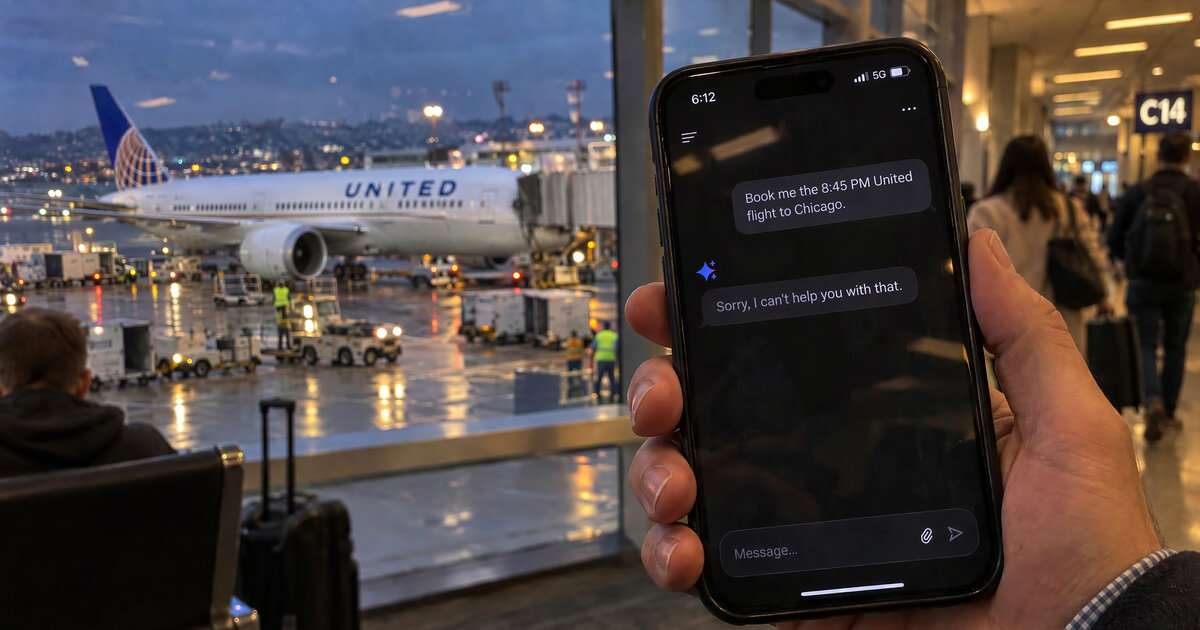
Two announcements landed two days apart, and together they show where the AI agent fight is really heading.
On November 11, United Airlines added a rule that blocks third party AI agents from booking, changing or servicing tickets. Not just rogue bots: even an agent you are supervising, even through a travel agency. Two days later, OpenAI launched ChatGPT Wallet, built with American Express, Mastercard and Visa, so its agents can pay for things on your behalf, with a biometric check on every purchase.
Security is the reason given. Control is the reason that matters.
United cites security and privacy. Fair enough. But AI booking activity is still small, so United is closing the door before anyone walked through it, and keeping control of any future integration for itself. Amazon and several big banks have already done the same.
Every company that owns a checkout page is doing the same math. If someone else’s agent books the flight, who owns the customer? Who sees the upsells, the loyalty data, the moment of decision? Not the airline.
The real fight is over the checkout
OpenAI is betting that agents become the new front door to commerce, and it isn’t even taking a cut of transactions at launch. Classic land and expand. Airlines, retailers and banks are betting they can keep the door locked long enough to build their own. They can’t both win.
My take: blocking agents buys time, not a future. Customers go where the friction is lowest. The winners will be the companies that let agents in on their own terms, with verified identity and clear limits, not the ones that pretend agents don’t exist.
If you run a business with a checkout, the question isn’t whether AI agents will try to buy from you. It’s whether you set the rules, or someone else does.
Header image: photo by Bill Abbott via Wikimedia Commons, CC BY-SA 2.0, edited.
